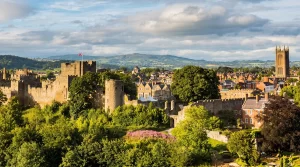
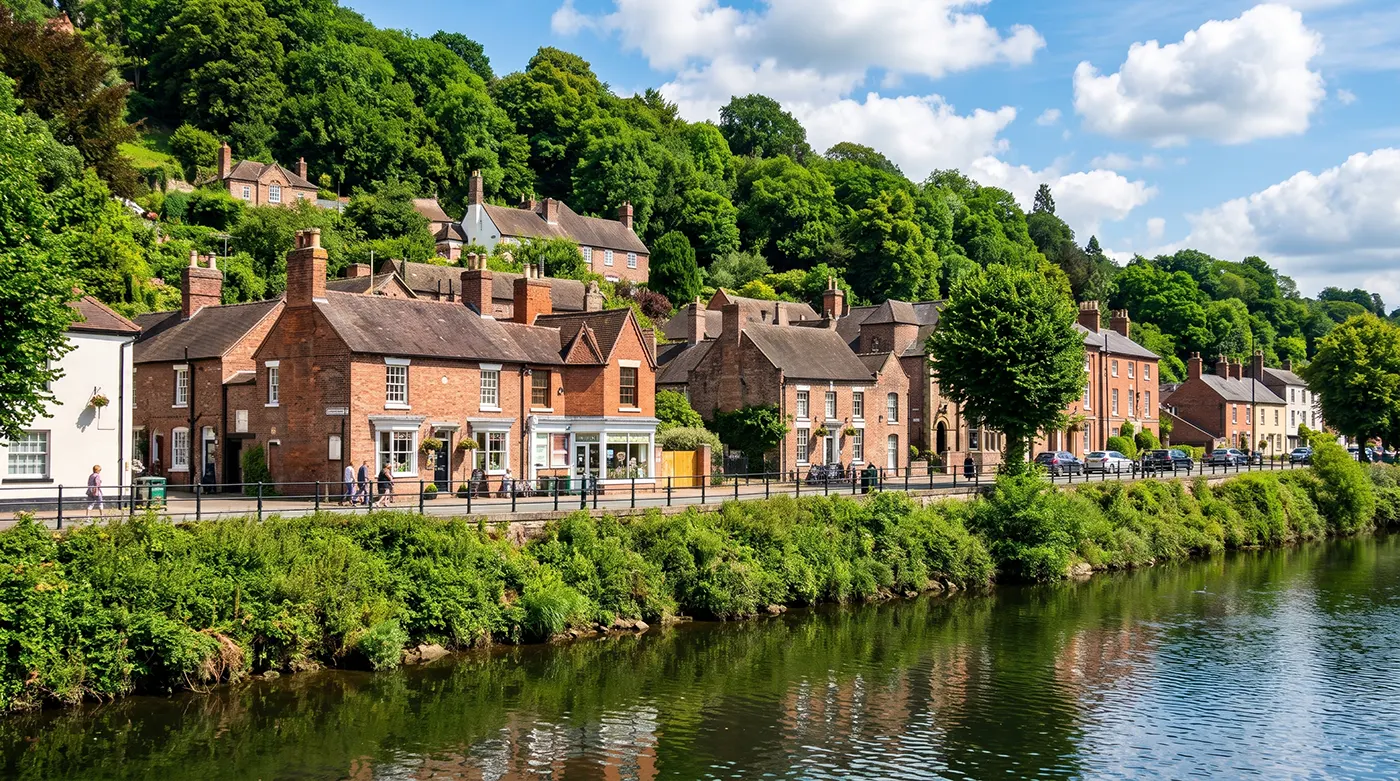
Thinking of moving to Shropshire?
Hybrid and remote working has fundamentally changed where people in the UK choose to live, and one county has emerged as a consistent beneficiary: Shropshire. Spacious, affordable, naturally beautiful, and better-connected than most people assume, it is drawing relocators from Birmingham, Manchester, and London in numbers not seen for a generation.
If you are thinking about moving to Shropshire — whether from a city, a neighbouring county, or further afield — this guide covers everything you need to know. We start with why people are choosing Shropshire right now, work through the property market with current data, explore the best areas for different kinds of buyers, and walk you through the practical process of getting here.
At Wrekin Moving & Storage, based in Wellington, Telford, we have been helping people relocate to Shropshire for decades. We know the county in detail — its roads, its towns, its character, and the logistical challenges that come with moving into a largely rural area. This guide is the one we would give a friend.
1. Why People Are Moving to Shropshire in 2026

The reasons people move to Shropshire are consistent: space, value, nature, and quality of life. But the scale of interest has accelerated since hybrid working became the default for a significant portion of the UK workforce. When the daily commute to Birmingham, Manchester, or London drops from five days a week to one or two, the calculus changes entirely — and Shropshire suddenly becomes realistic for buyers who would never have considered it before.
Exceptional Value for Money
Property in Shropshire costs, on average, around £40,000 less than the national average and significantly less than most comparable rural counties. The average sold price across Shropshire over the last three months stands at £315,716 against a national average of approximately £356,115, based on October 2026 data. For buyers relocating from Birmingham — where average prices sit above £240,000 for a terrace alone — or from London, the difference is transformative.
That gap is even wider for specific property types. A detached house in Shropshire averages £408,329, compared with £478,659 nationally — a saving of around £70,000 for the same type of property. Semi-detached homes average £244,762, versus £320,921 nationally. In practical terms, a budget that buys a three-bedroom semi in a Birmingham suburb buys a four-bedroom detached with a garden in much of rural Shropshire.
Connectivity That Surprises People
One of the most common misconceptions about Shropshire is that it is isolated. It is not. Shrewsbury is under an hour from Birmingham by train on direct services, and the M54 motorway connects Telford to the M6 and the national motorway network quickly. Telford itself — with its own railway station on the Shrewsbury to London Marylebone line — is around 1 hour 20 minutes from London by rail on the fastest services. For hybrid workers who need to be in a city one or two days a week, that is entirely manageable.
Space, Nature, and a Slower Pace
Shropshire is the largest landlocked county in England, and much of it falls within or alongside the Shropshire Hills National Landscape — an Area of Outstanding Natural Beauty covering the dramatic landscape of the Long Mynd, Stiperstones, and the Stretton Hills. For buyers who have spent years living in cities, the access to genuinely wild landscape — within twenty minutes of a market town with good schools and a Waitrose — is a genuine revelation.
Strong Schools and Family Infrastructure
Shropshire has a broad range of well-regarded state schools, including several with outstanding Ofsted ratings. The county operates a comprehensive secondary school system, and many of its primary schools serve tight-knit rural communities where teachers know their pupils well. For families, the combination of affordable family homes, good schools, and access to outdoor activities is hard to replicate at Shropshire price points anywhere else in England.
A Genuine Community
Shropshire’s market towns — Shrewsbury, Ludlow, Market Drayton, Bridgnorth, Oswestry, and others — have retained a distinctly local character. Independent shops, farmers’ markets, food festivals, and a strong voluntary and community sector give the county a sense of belonging that many relocators from cities find both surprising and welcome. Shrewsbury alone has been consistently voted one of the best places to live in England, and Ludlow’s reputation as a food and culture destination continues to draw visitors and buyers from across the country.
2. The Shropshire Property Market in 2026
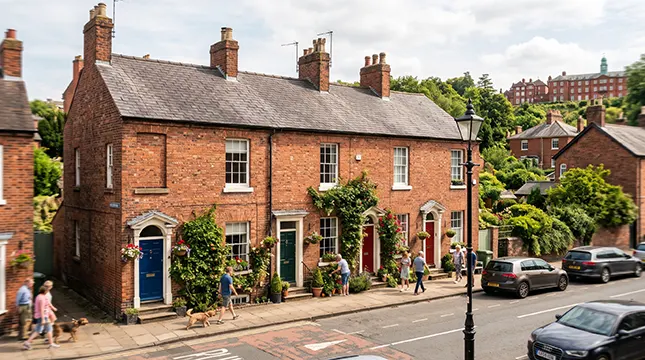
Shropshire’s property market in 2026 is characterised by stability rather than volatility — a welcome contrast to the turbulent years that followed the pandemic boom.
The average Shropshire house price sat at £299,612 in the first quarter of 2026, based on ORJ Solicitors’ analysis of government Land Registry data — virtually unchanged from the 2025 county average of £299,829. A stable market is good news for buyers and sellers alike: prices are not being pushed beyond what lenders will value, and transactions are completing with fewer renegotiations than during the volatile 2022-2024 period.
Price Comparison: Shropshire vs the National Average
The table below shows current average sold prices in Shropshire by property type, compared with the national average, based on October 2026 data:
| Property type | Shropshire avg | National avg | Saving |
| Detached | £408,329 | £478,659 | ~£70,000 |
| Semi-detached | £244,762 | £320,921 | ~£76,000 |
| Terraced | £257,358 | £273,206 | ~£16,000 |
| All properties | £315,716 | £356,115 | ~£40,000 |
Source: Completely Moved / HM Land Registry, October 2026.
Town-Level Prices
Prices vary considerably across the county. Based on data from the first half of 2026:
- Market Drayton: average £364,698, up 9.3% year-on-year — the strongest performing market in the county
- Telford: average £262,237, up 8% year-on-year — strong demand driven by regeneration and good transport links
- Shrewsbury: average £304,194, down 7.65% — a correction from recent highs, representing good buying opportunities in the county town
- Oswestry: average £244,085, down 12.5% — accessible entry point for buyers seeking a Welsh-border market town
- South Shropshire (Ludlow area, DY14 postcode): averages above £500,000 in some sectors — the premium end of the county market
Source: Shropshire Star / ORJ Solicitors analysis, 2026.
The Market Outlook
Most forecasters are cautiously optimistic about the UK property market in late 2026 and into 2027. Mortgage rates have fallen from their 2023-2024 peaks, easing affordability for buyers. Transaction volumes in Shropshire have dipped from recent highs — approximately 5,800 sales in the year to August 2026, down around 18% on the prior twelve months — but this reflects a normalisation from the pandemic-era surge rather than a structural market weakness. The underlying drivers of Shropshire demand — space, value, and remote-work migration — remain in place.
3. The Best Areas of Shropshire to Move To
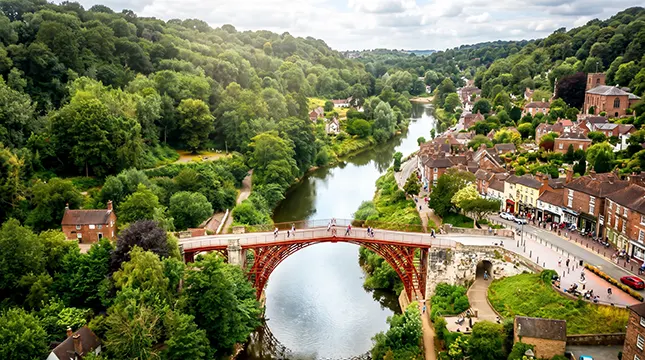
Shropshire is a large and varied county. The right area depends on what you are looking for — commuter proximity, rural tranquillity, a market town base, or access to specific schools. Here is a clear overview of the main options.
Shrewsbury
Shropshire’s county town is the natural choice for buyers who want the full market town experience: a medieval street plan, an outstanding range of independent shops and restaurants, direct rail connections to Birmingham and London, and some of Shropshire’s best schools. Shrewsbury suits buyers who want to be in a town rather than a village, and who value culture, convenience, and character. Average prices have corrected slightly in 2026, making this an interesting moment to buy in the county town.
Telford and Wellington
Telford is the county’s largest settlement and has the best transport infrastructure: direct rail to London Marylebone and Birmingham, the M54 motorway, and a modern town centre with a full retail and leisure offer. Wellington, where Wrekin Moving & Storage is based, is one of Telford’s most appealing market town areas — with a strong independent high street, excellent primary schools, and direct access to the open countryside of The Wrekin itself. Telford’s property market has been one of the strongest performers in 2026, up 8% year-on-year, making it a good choice for buyers who want value combined with urban infrastructure.
Bridgnorth
One of Shropshire’s most visually striking towns, Bridgnorth divides into a High Town and a Low Town connected by the only inland cliff railway in England. It sits on the River Severn, has an excellent range of independent shops and schools, and is around 45 minutes from Birmingham by road — making it a popular choice for Birmingham commuters who want to live somewhere genuinely different. Properties in the town centre and surrounding villages command a premium that reflects consistent demand.
Ludlow
Ludlow is one of England’s finest small towns — a medieval market town built around a Norman castle, with a national reputation for food, culture, and independent retail. Its annual food and drink festival draws visitors from across the country, and its property market is the most premium in Shropshire outside of the very best countryside locations. Buyers who choose Ludlow tend to stay for life. The south Shropshire countryside that surrounds it — including the Clun Valley and the edge of the Shropshire Hills AONB — is outstanding.
Market Drayton
Market Drayton in north Shropshire has been the strongest-performing market in the county in 2026, with average prices up 9.3% year-on-year. A classic English market town with a strong community identity, it sits close to the Cheshire border and offers good road access to the M6 via the A53. For buyers looking for a northern Shropshire base with Cheshire commuter potential, it represents genuine value.
Church Stretton and South Shropshire Villages
Church Stretton — known locally as “Little Switzerland” for its dramatic valley setting in the Shropshire Hills — is the choice for buyers who want to live fully immersed in the AONB. Small-scale, community-focused, and surrounded by some of the best walking terrain in England, it suits buyers who are prepared to be off the beaten track in exchange for a setting that is genuinely extraordinary. The surrounding villages of Craven Arms, Much Wenlock, Cleobury Mortimer, and Bishops Castle each offer their own distinct character.
Oswestry
On the Welsh border in north-west Shropshire, Oswestry is the county’s most affordable major market town — with average prices down 12.5% in 2026, presenting good value for buyers. It has a lively independent town centre, strong community spirit, and easy access into North Wales for buyers who want hills, coast, and countryside within easy reach.
4. How Long Does Moving to Shropshire Take? The Conveyancing Timeline

One of the most common questions buyers ask when planning a move is: how long will this actually take? The answer in 2026 is longer than most people expect.
According to Enact Conveyancing’s 2026 analysis, the typical time from offer acceptance to completion in the UK is now 16 to 20 weeks for a property chain. A straightforward freehold purchase with no chain can complete in as little as 8 to 10 weeks, but anything involving a chain, a leasehold, or complex searches should be budgeted at 4 to 5 months.
Here is a realistic timeline for a Shropshire move:
| Stage | Typical timing | Key actions |
| Offer accepted | Week 1 | Instruct solicitor, apply for mortgage, book survey |
| Searches and survey | Weeks 2-8 | Local authority, water, drainage searches; survey report; lender valuation |
| Enquiries resolved | Weeks 6-14 | Solicitor raises and resolves pre-contract enquiries with seller |
| Exchange of contracts | Weeks 12-18 | Pay deposit (usually 10%); set completion date; buildings insurance live |
| Completion | Weeks 14-20 | Funds transfer; keys released; move in |
Source: Enact Conveyancing, 2026.
Why Shropshire Searches Can Take Longer
Local authority searches in rural Shropshire can take longer than in urban areas. Shropshire Council covers a large and predominantly rural area with significant agricultural and planning complexity — including mineral extraction areas, flood plains, and AONB designations that require careful scrutiny. Mining searches and coal authority searches are relevant for parts of the county, particularly around the Telford area where the industrial heritage of Coalbrookdale and Ironbridge has left a legacy in the ground. Your solicitor should flag any relevant additional searches early in the process.
Choosing a Shropshire Solicitor
For a Shropshire move, using a solicitor with genuine local knowledge is a significant practical advantage. They will be familiar with local search timescales, the specific planning constraints relevant to rural properties, and any area-specific issues that a national conveyancing firm operating remotely may miss. Ask your estate agent for recommendations, and check the solicitor’s track record with rural and agricultural property if you are buying outside a town centre.
5. Your Moving to Shropshire Checklist

Once you have found your Shropshire property and had an offer accepted, the following checklist covers the key practical steps in roughly the order they need to happen. This is separate from the conveyancing process — these are the things you need to sort alongside it.
As Soon as Your Offer Is Accepted
- Instruct a solicitor immediately. Delays at this stage cost weeks later. Do not wait until the surveys are done.
- Submit your full mortgage application. An agreement in principle is not enough. Your lender needs a formal application for the property you are buying.
- Book a RICS-accredited surveyor. For rural Shropshire properties — particularly older farmhouses, cottages, or properties with outbuildings — a full structural survey is worth the extra cost over a basic homebuyer report.
- Get at least three removal quotes. Do this earlier than you think you need to, especially for summer moves. Our free home survey can be arranged before you have a confirmed date.
- Arrange home buyers’ protection insurance. Around one in four UK sales falls through before exchange. This insurance covers your survey and solicitor costs if it does. Relatively low cost for significant peace of mind.
- Give notice on your current property if you are renting. Check your notice period carefully — many tenancy agreements require two months.
Six to Eight Weeks Before Moving
- Start decluttering seriously. The less you move, the lower the removal cost and the less you unpack. A rule of thumb: if you have not used it in two years and it is not sentimental, it does not need to go to Shropshire with you.
- Research schools and confirm catchments. If you have children, speak to Shropshire Council’s admissions team early. Our article on moving house with children in Shropshire covers this in detail.
- Visit the new area again. Find the GP surgery you will register with, locate the nearest supermarket, identify the local pub. Making the area feel real before you arrive makes the first week significantly less disorienting.
- Notify your employer of the move. Update your payroll address and, if relevant, discuss whether the change of location has any implications for your role or contract.
Two to Four Weeks Before Moving
- Set up a Royal Mail redirection. This takes up to five working days to process. Redirect for at least twelve months — you will be surprised how much post still comes to your old address after a year.
- Notify essential services of your new address. HMRC, DVLA, your bank, pension providers, insurance companies, your GP and dentist.
- Book broadband installation at the new property. Rural broadband in Shropshire has improved significantly, but lead times for installation can be longer than in cities. Check coverage at your new address via Ofcom’s checker and book as early as possible if you work from home.
- Confirm your removal booking. Reconfirm the date, any packing requirements, and access arrangements for both the old and new properties.
Moving Day and the First Week
- Take meter readings with photographs at both the old and new properties on the day.
- Check that all items listed in the fixtures and fittings schedule are present.
- Find the stopcock, fuse box, and gas meter — and make sure every adult in the household knows where they are.
- Change the locks. The sellers will have handed over all keys, but there is no way to be certain copies do not exist.
- Register with a local GP surgery as soon as possible. Shropshire has some rural areas where GP capacity is limited — do not leave this for months.
- Update your voter registration via GOV.UK — this takes two minutes and ensures you can vote in Shropshire Council, parish council, and national elections from your new address.
6. Things Worth Knowing Before You Move to Shropshire
A few things that do not always feature in standard moving guides but that make a genuine difference if you are new to the county.
Rural Broadband: Check Before You Commit
Shropshire’s full-fibre broadband rollout has made significant progress in recent years, but coverage is still patchy in more remote rural areas. If reliable broadband is critical to your work or household — and for most buyers in 2026 it is — check coverage at the specific address using Ofcom’s broadband checker before exchanging contracts. If full-fibre is not yet available, check the timeline for the local rollout and whether satellite broadband such as Starlink offers adequate coverage as a bridge.
Rural Road Access and Winter Weather
Shropshire’s countryside is beautiful, and the lanes that wind through it are part of that beauty. They are also sometimes challenging — particularly in winter, when hill routes in the Shropshire Hills and parts of south Shropshire can be affected by snow, ice, and flooding. If you are buying a property in a genuinely rural location, drive the route to your nearest town on a bad weather day before committing. It is also worth knowing that some Shropshire lanes require careful navigation for larger removal vehicles — something our team is very familiar with. Flag access considerations when you book your survey with us.
Oil-Fired Heating and Off-Gas Properties
A significant number of Shropshire properties — particularly in rural areas — are not connected to the mains gas grid. Oil-fired central heating is common, and properties heated by air source heat pumps, ground source heat pumps, or biomass systems are increasingly common in rural new builds and conversions. If you are buying an off-gas property, factor in the cost and practicality of fuel delivery, tank maintenance, and the potential for future conversion to a heat pump system when you are budgeting for the move.
Agricultural Land and Rights of Way
If you are buying a rural property in Shropshire, your solicitor should check for agricultural overage clauses, statutory agricultural tenancies, and any rights of way that run through the land. Shropshire’s footpath and bridleway network is extensive and well-used — a right of way through a garden is not unusual, and understanding the implications before you buy is important.
The Ironbridge Gorge: A UNESCO World Heritage Site on Your Doorstep
If you are moving to Telford or the area around Wellington, Madeley, and Broseley, you will have the Ironbridge Gorge UNESCO World Heritage Site within minutes of your front door. Ten museums, including the living history site of Blists Hill Victorian Town, the original Iron Bridge itself, and some of the finest industrial heritage in the world, make this one of the most remarkable things about living in this part of Shropshire — and one that residents often take for granted after the first year. Do not.
7. Planning Your Move to Shropshire with Wrekin Moving & Storage
Moving to Shropshire from outside the county — whether from a city, another county, or another part of the UK entirely — involves a set of logistical challenges that are different from a local move. Access, distance, rural road conditions, and the need for flexible storage if completion dates shift all need to be planned for in advance.
Wrekin Moving & Storage has been handling both local Shropshire moves and long-distance relocations into the county for decades. As members of the British Association of Removers (BAR), we combine genuine local knowledge of Shropshire with the resources to handle moves from anywhere in the UK or internationally.
Our services for buyers moving to Shropshire include:
- Free home survey and video survey: a thorough assessment of your move before we quote. For long-distance moves, our video survey option means you do not need to wait for a physical visit to get an accurate quote.
- Professional packing: our trained packing teams pack and protect your belongings with professional materials. See our packing solutions page for full details.
- Flexible completion date changes: property chains shift. We plan for this from the outset and accommodate date changes wherever possible. For guidance on what to do if your sale collapses, see our article on what to do if your house move falls through.
- Secure storage in Wellington: if you need to vacate your current property before your Shropshire completion date, our secure storage facility holds your belongings safely for as long as you need.
- Removals insurance: full insurance cover for your belongings throughout the move, included in your quote.
Ready to start planning your move to Shropshire? Contact our team today for a free, no-obligation quote. We look forward to welcoming you to the county.
Frequently Asked Questions: Moving to Shropshire
Is Shropshire a good place to live?
Consistently, yes. Shropshire regularly features in surveys of the best places to live in England, and Shrewsbury in particular has been named one of England’s top market towns by multiple publications. The county offers an exceptional combination of natural beauty, affordable property, good schools, and strong community life. It is particularly well-suited to families, remote workers relocating from cities, and buyers who prioritise quality of life over urban convenience. See our full guide to living in Shropshire for a detailed overview.
What is the average house price in Shropshire in 2026?
The average sold price across Shropshire over the last three months stands at £315,716, based on October 2026 Land Registry data — around £40,000 below the national average. Prices vary significantly across the county: Market Drayton averages £364,698 and is rising; Oswestry averages £244,085 and represents strong value; south Shropshire rural properties can exceed £500,000. The county average has remained broadly stable throughout 2026 at around £299,000 to £315,000 depending on the data period used.
How long does it take to buy a house in Shropshire?
The same timelines apply in Shropshire as elsewhere in England and Wales: typically 16 to 20 weeks from offer to completion for a property chain, or 8 to 10 weeks in a best-case scenario with no chain. Rural Shropshire properties can involve slightly longer search timescales due to the complexity of local authority searches covering agricultural, planning, and heritage considerations. Budget four to five months from offer acceptance, and use a solicitor with genuine local knowledge.
What are the best areas to live in Shropshire?
The best area depends on your priorities. For connectivity and urban infrastructure: Telford and Wellington. For county town culture and rail access: Shrewsbury. For dramatic scenery and the full rural experience: Church Stretton and south Shropshire. For food, history, and character: Ludlow. For affordability: Oswestry or Canford Heath. Our article on the best places to live in Shropshire covers each area in detail.
Is broadband good in Shropshire?
In towns and most suburban areas, yes — Shrewsbury, Telford, and most market towns have good full-fibre or superfast broadband coverage. Rural coverage is more variable, and some remote villages and hamlets are still waiting for full-fibre rollout. Always check your specific address using Ofcom’s broadband checker before exchanging contracts. Satellite options such as Starlink provide a reliable fallback in areas where ground infrastructure lags.
Does Wrekin Moving & Storage cover long-distance moves to Shropshire?
Yes. We handle moves to Shropshire from anywhere in the UK, including long-distance relocations from London, the South East, the North, and Scotland. As part of the White & Company group, we have access to 21 branches and storage facilities nationwide, which means we can coordinate large or complex moves to Shropshire from any origin. Contact us for a free, no-obligation quote.